
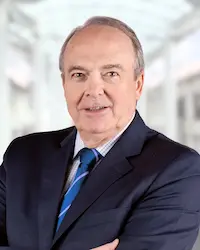
Dr. Tim Marchant
Chairman
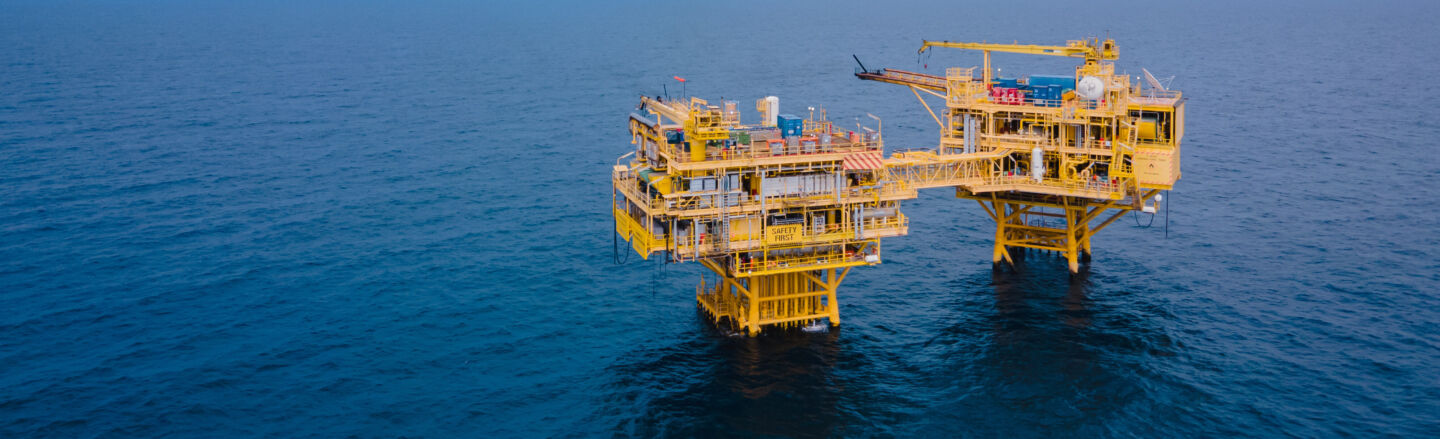
Valeura Energy Inc. is an upstream oil & gas company, with a clear strategy to add value for shareholders.
The Company is well-positioned both for organic growth and for potential further inorganic growth, and maintains a continual focus on operational excellence.
Chairman
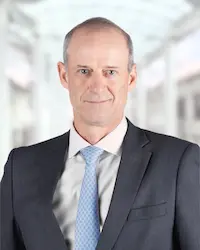
Director
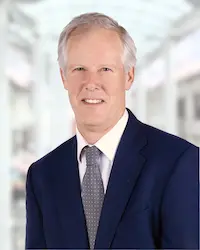
Director
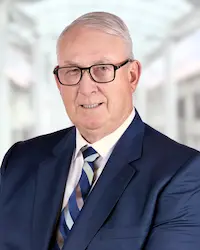
Director

Director

Director

Director
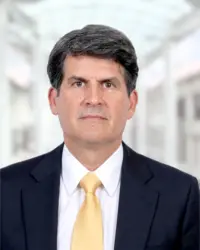
Director
Chairman
Dr. Tim Marchant holds a Ph.D in Geology and has more than 35 years of senior executive experience in the oil and gas industry in Canada and internationally, with extensive experience in international operations and foreign growth strategies. In a career that spanned 29 years with Amoco and BP, he held senior executive positions in Canada and a number of countries in the Middle East including Egypt, Saudi Arabia, Abu Dhabi and Kuwait. Dr. Marchant is currently Adjunct Professor of Strategy and Energy Geopolitics at the Haskayne School of Business, University of Calgary. He also serves as a non-executive director of Vermilion Energy Inc.
Ph.D. in Geology, Trinity College, University of Dublin, Ireland; Graduate of the Executive Program at the Ivey School of Business, University of Western Ontario, 1994; Member of the Institute of Corporate Directors; completed the ICD Directors Education Program in 2011
Health, Safety, and Sustainability Committee (chair); Reserves Committee
Director
Dr. Guest (Ph.D., Geology) has worked in the international oil and gas industry for over 30 years and is currently based in Singapore, at the heart of the energy-hungry Southeast Asia region. He led Valeura Energy’s transition from a small-cap Turkish gas producer of approximately 1,000 boe/d to become the largest independent operator of oil production in Thailand, with current production of more than 23,000 bbls/d and strong ongoing cash generation.
Under his leadership, the Company attained the prestigious No. 1 position in the Globe and Mail’s 2025 ranking of Canada’s Top Growing Companies. Additionally in 2024, The Energy Council awarded Valeura the top energy company in the Asia-Pacific region and Dr. Guest as the top executive. Prior to spearheading the transition toward Southeast Asia, Dr. Guest oversaw Valeura’s operated gas exploration play in the Thrace basin, pursuing a deep, high-pressure/high-temperature basin-centered gas accumulation.
Before joining Valeura, he was the CEO of two private junior companies, including Pexco Energy, a $700 million company that held production and exploration assets in the Australia-Asia region and East Africa. While running Pexco, he resided in Jakarta, Indonesia and oversaw the company’s first ever operated development and production from an oil field in Sumatra. Prior to his CEO roles, he worked in new business development and exploration for Woodside in Australia and Libya, and for Shell in the Netherlands, Australia, and Malaysia. His early career roles focussed on the “coal face” of the upstream industry, working with Schlumberger in Egypt.
B.Sc. Geological Engineering, Queen’s University, 1985; Ph.D. Geological Sciences, 1993.
Director
Tim Chapman is an international capital markets specialist residing in London with more than 30 years of experience spanning the globe. His career includes 25 years in investment banking roles with large financial institutions including JP Morgan Chase, CIBC World Markets, and finally RBC Capital Markets where he was head of international oil & gas. Mr. Chapman’s career has focused on corporate strategy and valuation, regularly providing expert advice to many companies on seminal M&A transactions and capital raises. His experience within the oil and gas sector is diverse, including upstream, downstream and oilfield services companies. In 2015, Mr. Chapman founded Geopoint Advisory Limited which provides independent advice to energy companies. He is also a director of certain Petrogas North Sea subsidiaries. Mr. Chapman started his professional life as a geologist and graduated from Earth Sciences at Oxford University.
BA Honours Geology, Oxford University, St. Peters College, 1990
Health, Safety, and Sustainability Committee; Reserves Committee (chair)
Director
Russell Hiscock joined the Valeura board in January 2018 and is the past President and Chief Executive Officer of the CN Investment Division (Montreal), which manages one of the largest corporate pension funds in Canada. He has many years of equity portfolio management experience in both the Canadian and international stock markets, with particular emphasis on the oil and gas sector. He is a past Chairman of the Pension Investment Association of Canada (PIAC).
Certified Chartered Financial Analyst; Chartered Professional Accountant; Bachelor of Mathematics degree, University of Waterloo; Master of Arts degree in Economics, University of Western Ontario; MBA, University of Toronto.
Governance, Nominating and Compensation Committee
Director
Anna Green is a lawyer by background and has over 25 years of experience through a career focused squarely on the Asia Pacific region, primarily within the banking and technology sectors. She held increasingly senior roles with ANZ bank, including serving as the group’s Chief Risk Officer, and later as CEO for the bank in Laos and in the Philippines. Thereafter, Ms. Green transitioned to a technology-oriented career with Amazon, where she excelled at driving change through development of marketing, acquisition, and growth strategies. She was recognised for her successes as Asia IT Woman of the Year at the prestigious Women in IT Awards. In 2023 she joined the Toll Group, a leading global transportation and logistics provider, where she currently serves as Chief Enterprise Services Officer. Ms. Green is a passionate advocate for diversity and inclusion and is well-known for having partnered with the UN, regulatory and government bodies, as well as customers and business councils to build mechanisms that drive meaningful change.
Bachelor of Laws, University of NSW; Bachelor of Arts (Political Science), Australia National University; Chief Executive Women scholarship at INSEAD.
Governance, Nominating, and Compensation Committee (chair); Health, Safety, and Sustainability Committee
Director
Lina Lee was appointed as an independent director of Valeura effective August 1, 2023. Ms. Lee is a specialist in finance and energy, with over 25 years of experience in multiple industries and cultures, culminating in senior leadership positions at BP. She has held roles focused on rigorous portfolio management, financial management, business development, treasury and deal structuring, most recently serving as CFO & VP Strategy of BP’s Global Petrochemicals business. With considerable experience in developing and executing strategies focused on Asia, Europe, the Middle East, and Russia, Ms. Lee brings a wealth of international acumen and a strategic growth mindset, with a particular emphasis on executing inorganic growth transactions and business improvement initiatives. She is a Chartered Financial Analyst, educated in business.
Bachelor of Business Administration (Honours), The Chinese University of Hong Kong, Hong Kong; Master of Business Administration, Kelley School of Business, Indiana University at Bloomington, U.S.A; Executive education, Harvard Business University, U.S.A.
Governance, Nominating, and Compensation Committee
Director
Chalermchai Mahagitsiri was appointed as a director of Valeura in May 2025. Mr. Mahagitsiri is an entrepreneur engaged in various industries including energy, logistics, manufacturing, food and beverage, real estate, and the arts. He has led the Mahagitsiri family office into new markets, whilst enhancing strong governance and long-term value creation. Mr. Mahagitsiri has held leadership roles across several of his family’s businesses, including PM Group Co., Ltd., Posco-Thainox Public Company, Ltd., Lakewood Country Club Co., Ltd., and Quality Coffee Products Co., Ltd. Currently, Mr. Mahagitsiri serves as Executive Director, President and Chief Executive Office of Thoresen Thai Agencies Public Company Limited, and is also a member of the boards of Unique Mining Services Public Company Limited, PM Thoresen Asia Holdings Public Company Limited, Thai Future Incorporation Public Company Limited, and Mermaid Maritime Public Company Limited.
Bachelor of Science in Accounting and Finance, Suffolk University; Master of Science in Economics and Finance, Boston University.
Director
Mr. Tomkiewicz is a lawyer and energy law specialist with over 30 years of managerial, transactional, and litigation experience involving some of the world’s largest companies.
He is currently active in various board and executive capacities and serves as advisor on energy and legal issues. Mr. Tomkiewicz was previously a Partner and Co-Chair of the Energy Industry Team at Thailand’s oldest law firm, Tilleke & Gibbins. Prior to that, he served as general counsel, director, and officer of several Chevron Corporation affiliates, based in Bangkok, Thailand, and previously in Nigeria and Bangladesh. Earlier positions involved managing a 250-member team responsible for the merger of Exxon and Mobil, serving as Acting General Counsel at two of Mobil’s largest overseas affiliates in the middle east, as well as drafting, negotiating, and executing multi-billion dollar contracts on oil, gas, and chemical construction projects worldwide. His legal career has included managing a wide variety of litigated matters including antitrust, construction, copyright, exploration and producing, labour, maritime, marketing, patent, and tort law. Mr. Tomkiewicz currently serves as Sitting Director and Executive Committee member of the Association of International Energy Negotiators (“AIEN”) in Houston, Texas and is an Executive Committee member of The Future Energy Asia.
LL.M., Georgetown University, USA; J.D., Yeshiva University’s Cardozo School of Law, USA; B.A. in French, University of Wisconsin, USA.
Governance, Nominating, and Compensation Committee; Health, Safety, and Sustainability Committee; Reserves Committee
President & Chief Executive Officer
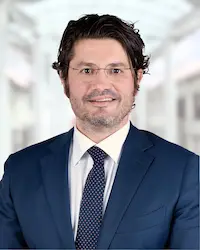
Chief Financial Officer
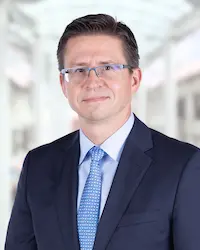
Chief Operating Officer
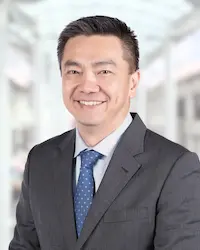
Executive Vice President, Corporate, General Counsel, Corporate Secretary
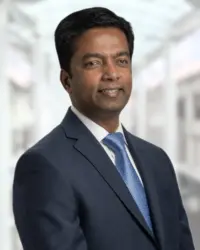
President and Country Manager, Valeura Energy (Thailand)
President & Chief Executive Officer
Dr. Guest (Ph.D., Geology) has been working internationally in the oil and gas industry for 30 years. Prior to joining Valeura, he was the CEO of two private junior companies. Pexco Energy, a $700 million company held production and exploration assets in the Australia-Asia region and East Africa. During his tenure, Pexco was producing ~10,000 boepd from its assets in Indonesia and Australia. While running Pexco, he resided in Jakarta, Indonesia and oversaw the company’s first operated development of an oil field in Sumatra. The company also expanded their gas production in Australia with the development of a new offshore gas field and upgrades and debottlenecking of the associated onshore gas plant. Prior to his CEO roles, he also worked for Woodside in Australia and Libya, and for Shell in the Netherlands, Australia and Malaysia. He started his career with Schlumberger working in Egypt.
B.Sc. Geological Engineering, Queen’s University, 1985; Ph.D. Geological Sciences, 1993
Chief Financial Officer
Mr. Ben-Meriem, is a finance professional with over 15 years experience in oil and gas investment banking and finance, most of which have been focused on Southeast Asia. Before joining Valeura as CFO, he was a founder of Panthera Resources, a start-up E&P company focused on Southeast Asia, which became Valeura’s key partner in pursuing its two Gulf of Thailand acquisitions. Prior experiences include increasingly senior resource-oriented positions with ABN AMRO and Standard Chartered in Singapore, in addition to earlier-career roles with Ernst and Young.
MBA, INSEAD
Chief Operating Officer
Dr. Kulawski is a seasoned executive leader, with 25 years of upstream oil and gas experience. His international career prior to joining Valuera has been with Shell, including the roles of Deputy CEO and Production Director of Sakhalin Energy, Vice President of Safety for the Shell group globally, and General Manager and Director of Shell’s onshore and shallow water assets in Nigeria. He has substantial experience in brownfield production operations and greenfield developments including key health, safety and environment-related responsibilities. Mr. Kulawski has a proven track record in leading international and multi-cultural teams through complex projects including major facility turnarounds and integrating new businesses.
B.Eng. (1st class honours) Electronic & Electrical Engineering, University of Birmingham, 1993; Ph.D. Electronic and Electrical Engineering, 1998
Executive Vice President, Corporate, General Counsel, Corporate Secretary
Mr. Tang has worked in the international oil and gas industry for over 18 years. Prior to joining Valeura, he was most recently the Head of Business Development of Hibiscus Petroleum and before that, the CEO of KrisEnergy, a Singapore-listed predecessor company to Valeura’s initial interests in Thailand. Prior to his CEO role, Mr. Tang served as KrisEnergy’s Chief Operating Officer and, preceding that, their General Counsel. Previous roles included General Counsel at Pearl Energy and Aabar Petroleum (which was acquired by Mubadala), as well as various legal and investment-oriented positions earlier in his career.
LLB. National University of Singapore, 1999
President and Country Manager, Valeura Energy (Thailand)
Mr. Nithiyeswaran is a professional engineer and accomplished leader within the upstream oil and gas industry. He brings deep experience built through senior leadership positions covering both oil and gas-oriented businesses in Canada and abroad. Most recently, he served as Chief Operating Officer for CNOOC North America, after having held leadership roles with the same company overseeing oil sands operations, health, safety, and environment, and serving as the company’s Chief Information Officer. Prior to his roles with CNOOC in Canada, he served as President and General Manager of Husky-CNOOC Madura, managing an offshore natural gas joint venture in Indonesia. Earlier in his career, Mr. Nithiyeswaren gained diverse cross-industry experience within the financial services, hi-tech contract manufacturing, and mining sectors.
B.A.Sc. Electrical and Computer Engineering, University of Toronto 1999; Navigator – Executive Development Programme, Saïd Business School, University of Oxford 2015.
Valeura Energy Inc. (“Valeura” or the “Company”) is a Canadian company focussed on exploration, development and production of oil and natural gas.
Since Valeura was established in 2010, the Company has executed a number of highly accretive transactions, resulting in a material operated portfolio of oil-producing assets in the offshore Gulf of Thailand, in addition to an operated interest in a deep, tight gas appraisal play in the Thrace basin, onshore north-west Türkiye (Turkey).
Valeura’s shares are traded in Canada on the Toronto Stock Exchange under the trading symbol VLE and are quoted in the United States on OTCQX under the symbol VLERF.
1. Maximise Cashflow from Organic Portfolio
2. Operational Excellence
3. Inorganic Growth
Valeura Energy Inc.’s origins stem from two predecessor companies, PanWestern Energy Inc. (“PanWestern”) and Northern Hunter Energy Inc. (“Northern Hunter”) (private), which were combined by a Plan of Arrangement and renamed Valeura Energy Inc. in September 2010. The founders of Valeura had previously build and sold Verenex Energy Inc., which was active in Libya, and subsequently capitalised Northern Hunter as the platform for a new international company. The arrangement with PanWestern provided a TSXV listing, and in June 2011 the Company graduated to the TSX.
The Company immediately set out to become a global energy company focused on exceptional value creation, with a primary geographic concentration on Turkey, plus minor non-core interests in Canada which were inherited from the combination of PanWestern and Northern Hunter.
Through a series of commercial transactions spanning 2010 through 2014, Valeura entered into several farm-in agreements, acquisitions, and new licences, focused initially on the Anatolian Basin in southeast Turkey, and later on the Thrace Basin in north-west Turkey. The Company was strategically seeking production opportunities where it recognised upside potential via both development-focused operations and also exploration.
In April 2013, the Company was awarded the Banarli licence (100% Valeura) in the centre and deepest part of the Thrace Basin, which the Company believed had upside potential for a deep, tight gas play.
In 2013 and 2014, the Company relinquished various assets in the southeast Turkey which proved to have limited upside potential. In 2014, the Company also sold its small, non-core assets in Canada.
Over this period, the Company generated revenue from oil and gas sales reaching an annual peak of nearly $25 million in 2014.
With the sales of non-core assets in Turkey and Canada completed, the Company concentrated its focus on its business in the Thrace Basin.
Also during this period, regulatory and legislative changes in Turkey resulted in the conversion of various petroleum titles to a new form of exploration licences and production leases including the conversion of the Banarli licence into two new exploration licences in June 2015.
Valeura and its JV partners, including Thrace Basin Natural Gas Turkiye Corporation (“TBNG”), concentrated their operational efforts on conventional, shallow gas production from their lands in the Thrace Basin, including fracking and producing from shallow, normally-pressured tight gas sands in both vertical and horizontal wells at depths down to approximately 1,500 – 2,000 metres. Valeura made several shallow gas discoveries and drilled the Yayli-1 well, on the Banarli licences, which demonstrated gas flow from two small fracks in over-pressured sands at depths of 2,700 – 2,900 metres.
In 2016, Valeura executed various agreements with Statoil (later renamed “Equinor”) to jointly exploit deeper formations on Valeura’s acreage in the Thrace Basin. Under the terms of the agreements Equinor committed to an investment on the Banarli licences, including payment of back costs and carrying the cost of two deep wells plus completing a significant infill 3D seismic program to earn a 50% interest in the deep rights (the “Banarli Farm-in”). Equinor was granted the right to become operator of the deep rights after earning its interest.
Also in 2016, Valeura acquired its JV partner TBNG, and concurrently sold certain deeper rights in its west Thrace exploration licences and production leases to Statoil.
During this period, Valeura continued to generate revenue from its ongoing conventional gas production in the Thrace Basin, with annual revenues of C$16 million in 2016 and C$15 million in 2017. Decreased revenues were largely a function of globally depressed energy prices.
From May through July 2017, Valeura drilled Yamalik-1, the first well under the Banarli Farm-in, intended to explore the deeper formations of its Thrace Basin lands. The well was drilled to approximately 4,100 metres and encountered a 900-metre interval of highly over-pressured gas-bearing sands, confirming the attributes of a deep tight gas play. Test results gathered in November and December 2017 proved an aggregate 24-hour test rate of 2.9 MMcf/d of liquids-rich gas.
In February 2018, the Company announced results of an independent evaluation of the Company’s prospective resources in the tight gas play as prepared by DeGolyer and MacNaughton (“D&M”) which attributed 10.1 trillion cubic feet of estimated unrisked mean prospective resources of natural gas which includes 236 MMbbls of condensate, to Valeura’s working interest of the play, at that time.
In September 2018 the Company re-completed the Yamalik-1 well, connected it to Valeura’s gas gathering infrastructure, and put the well on long-term test.
From October 2018 through January 2019, the Company drilled the Inanli-1 appraisal well, the second well under the Banarli Farm-in, at a location approximately 6 km to the north-east of Yamalik-1. The well was drilled to 4,885 metres and encountered a 1,615 metre gross column of high net-to-gross sandstone, interpreted to contain over-pressured gas.
From February through April, 2019, the Company drilled the Devepinar-1 appraisal well, at a location approximately 20 kilometres to the west of the Yamalik-1 and Inanli-1 wells. Devepinar-1 was drilled to 4,796 metres, with clear indications of over-pressured gas throughout a 1,066 metre gross column in the Teslimkoy and Kesan Formations. Three intervals were stimulated in the well, and were production tested on a comingled basis, demonstrating dry gas flow to surface.
In February 2020, Valeura’s joint venture partner for the deep gas appraisal programme elected to discontinue participation in the play and their working interest reverted to the remaining partners. As a result, Valeura’s management estimates that its working interest share of unrisked recoverable natural gas prospective resource in the play has increased to 20.2 trillion cubic feet equivalent.
In August 2020 Valeura articulated a clear strategy to add value for shareholders.
The Company committed to maximise the value of its conventional gas production business, and its efforts have culminated in a decision to sell the asset, effective July 1, 2020 for headline cash consideration of US$15.5 million, with additional upside consideration via royalty payments in the amount of US$1.0 – US$2.5 million over a five -year period. The transaction closed in Q2 2021.
Valeura’s announced strategy is focused on pursuing mergers and acquisitions as a way to add production and cash flow in the near/mid-term. The management team believes market conditions are favourable to leverage its strong financial position and internationally savvy team toward inorganic opportunities in the regions where the team has a demonstrated track record of success.
The Company is continuing with appraisal of the deep, tight gas play, and has integrated all learnings to date from drilling and testing deep gas appraisal wells. This has yielded a forward programme targeting “sweet spots” in the play where the best quality reservoir occurs at depths which offer optimal fluid and flow characteristics, namely, the dry gas window. The Company intends to secure an additional partner to participate in the play, before committing substantial capital to the play.
In April 2022 Valeura announced that it had entered into agreements to acquire various shallow water assets, offshore Gulf of Thailand, effective 01 January 2022. The assets included a near-term production opportunity at the Wassana oil field (89% operated interest) and a near/medium-term development project at the Rossukon oil field (43% operated interest). The acquisition closed on 15 June 2022.
In December 2022 Valeura announced that it had entered into an agreement to acquire three additional shallow water assets, offshore Gulf of Thailand, effective 31 August 2022. The assets include a 100% interest in the Jasmine and Ban Yen oil fields, a 90% operated interest in the Nong Yao oil field, and a 70% operated interest in the Manora oil field. The acquisition was completed on 22 March 2023.
In February 2023 Valeura closed a bought deal financing, involving a private placement offering of 3,937,000 common shares of the Company at a price of C$2.54 per share, for aggregate proceeds of approximately C$10 million.
In April 2023 Valeura announced that it had 1) resumed oil production at the Wassana field, 2) it had increased its working interest in Licence G10/48 (containing Wassana) to 100%, and 3) it had divested its working interest in Licence G6/48 (containing Rossukon) in exchange for cash consideration contingent upon first oil from Rossukon and an overriding royalty.
In July 2023 Valeura’s shares begain trading in the United States on OTCQX under the symbol VLERF.
In February 2024 Valeura announced its reserves as of 31 December 2023. The results indicated 2P reserves additions in 2023 of more than double the volume of oil produced in 2023, a 219% reserves replacement ratio. In subsequent years, as announced February 2025 and February 2026, Valeura again announced its year-end reserves, each time indicating a 2P reserves replacement ratio of approximately 200%. These reserves additions have extended all fields’ end of economic field life, and therefor increased the net present value of the assets.
In November 2024 Valeura announced the completion of an internal restructuring of its Thailand subsidiary companies resulting in the pooling of tax loss carry-forwards (estimated as US$397 million at 30 September 2024), meaning these carry-forwards can be used to offset taxable income from its three Thai III concessions, covering the Wassana, Nong Yao, and Manora fields.
In May 2024 Valeura took a positive final investment decision to redevelop the Wassana oil field. The project would entail an estimated US$120 investment into facilities over two years, primarily to build and deploy a new-build central processing platform, intended to optimise the full potential of the G10/65 block.
In July 2025 Valeura entered into a strategic farm-in agreement with PTT Exploration and Production Plc (“PTTEP”) whereby it could earn a 40% non-operated working interest in two offshore Gulf of Thailand blocks, being G1/65 and G3/65. The blocks include 15 oil and gas discoveries, and the Company believes they present an opportunity for infrastructure-led growth, based on their proximity to existing oil and gas producing assets in adjacent acreage operated by both Valeura and PTTEP. Deal closing is subject to government approval.
In October 2025 Valeura entered into a joint venture with Transatlantic Petroleum LLC (“Transatlantic”) whereby Transatlantic could earn a 50% working interest in Valeura’s Thrace basin deep gas play in Türkiye. Earning requirements were later satisfied in respect of the West Thrace Production Leases and West Thrace Exploration Licence, and the transfer of interest is pending.
In July 2026 Valeura entered into a revolving and expandable credit facility, providing a revolving credit line of up to US$75 million, and an uncommitted accordion feature allowing total commitments to be increased to US$325 million in aggregate. The Facility complements the Company's existing cash position of approximately US$320 million at the end of Q2 2026, and thereby created total potential liquidity of approximately US$645 million. The Company stated that it intends to deploy these financial resources to add value through mergers and acquisitions, and plans to only draw from the Facility when acquisition funding is needed.
A video is being shown