
Land Area
783,562
KM2
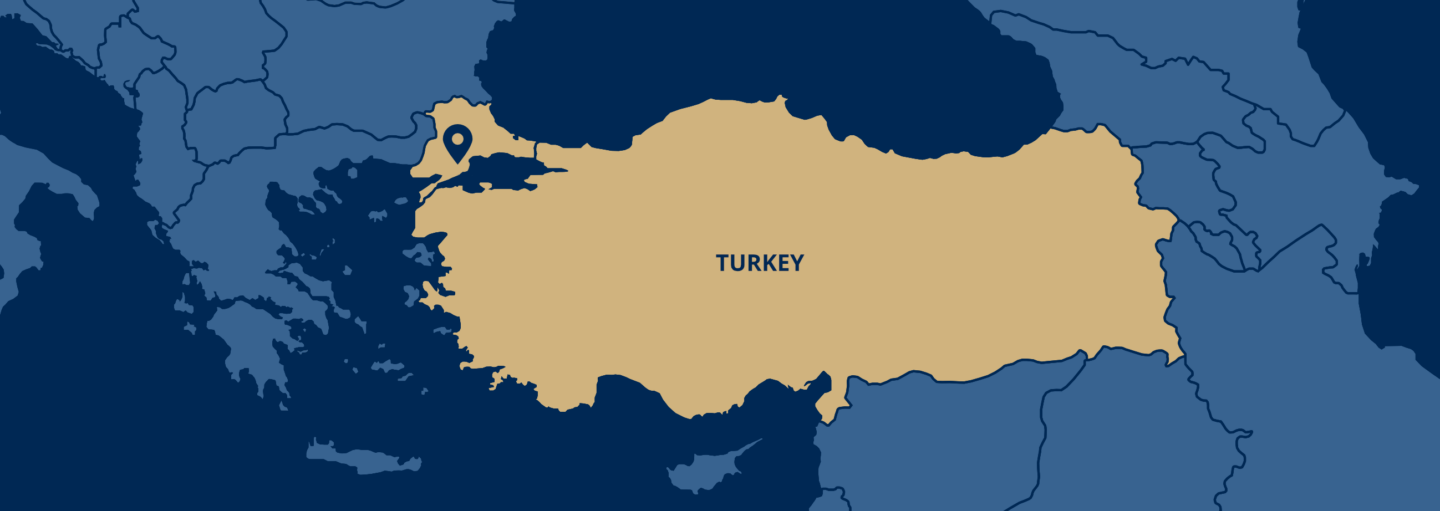
Valeura has operated in Turkey for 12 years, and believes the country presents an excellent stage for hydrocarbon investment, including under-exploited plays within proven petroleum systems and very favourable above-ground characteristics, including strong pricing dynamics, directly linked to the rest of Europe.
Prospectivity
Positive Business Environment
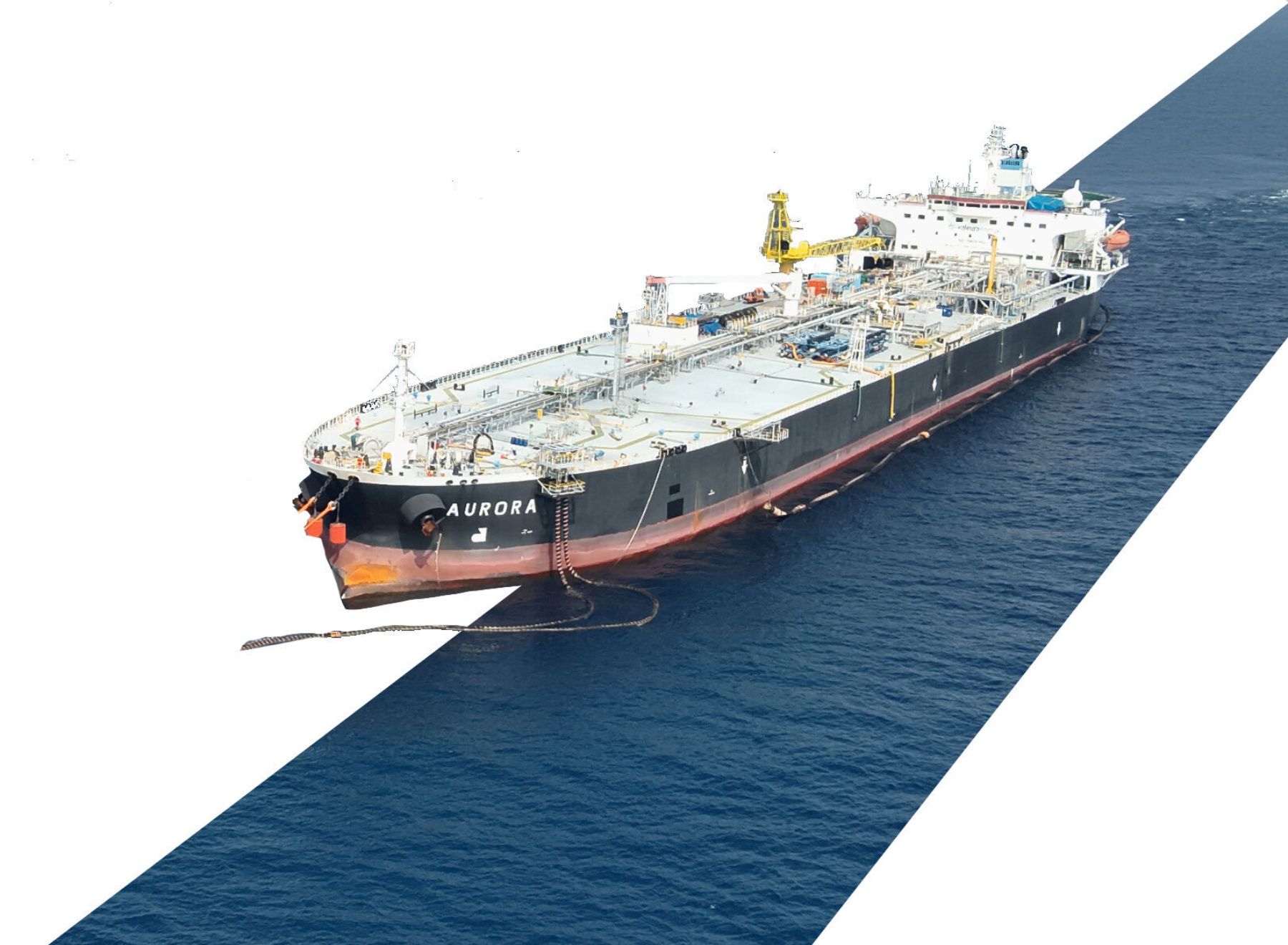
Türkiye’s location at the crossroads of Europe and Asia has shaped its history and people and made it a country of significant geostrategic importance. In more recent times, the strong growth of Türkiye’s economy and its role as a key energy transit hub have seen it recognised as regional power.
Following the adoption of financial and fiscal reforms as part of an IMF programme early in the prior decade, Türkiye’s economy grew strongly from 2001-2008, averaging more than 6% annually. In 2010 and 2011, Türkiye’s economy was one of the fastest growing in the world with annual GDP growth rates of 9.2% and 8.8%, respectively. During this same period, Türkiye had seen the fastest growth in energy demand in the OECD driven by this economic growth as well as the urbanisation of the population. According to the International Energy Agency, this is set to continue with energy demand expected to double over the next decade. The GDP growth rate has since moderated to between 2% and 6% per annum.
As well as being a major energy importer, Türkiye is a key energy transit hub between the demand centres of Europe and the major producing regions in Russia, the Caspian region and the Middle East.
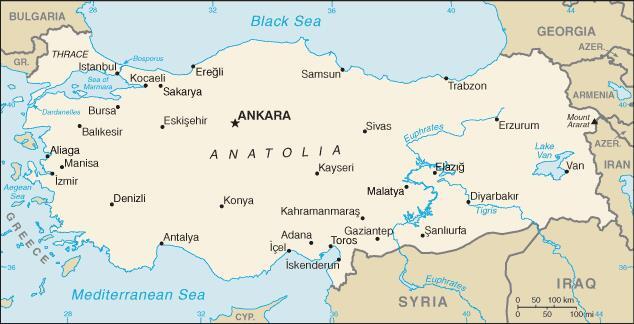
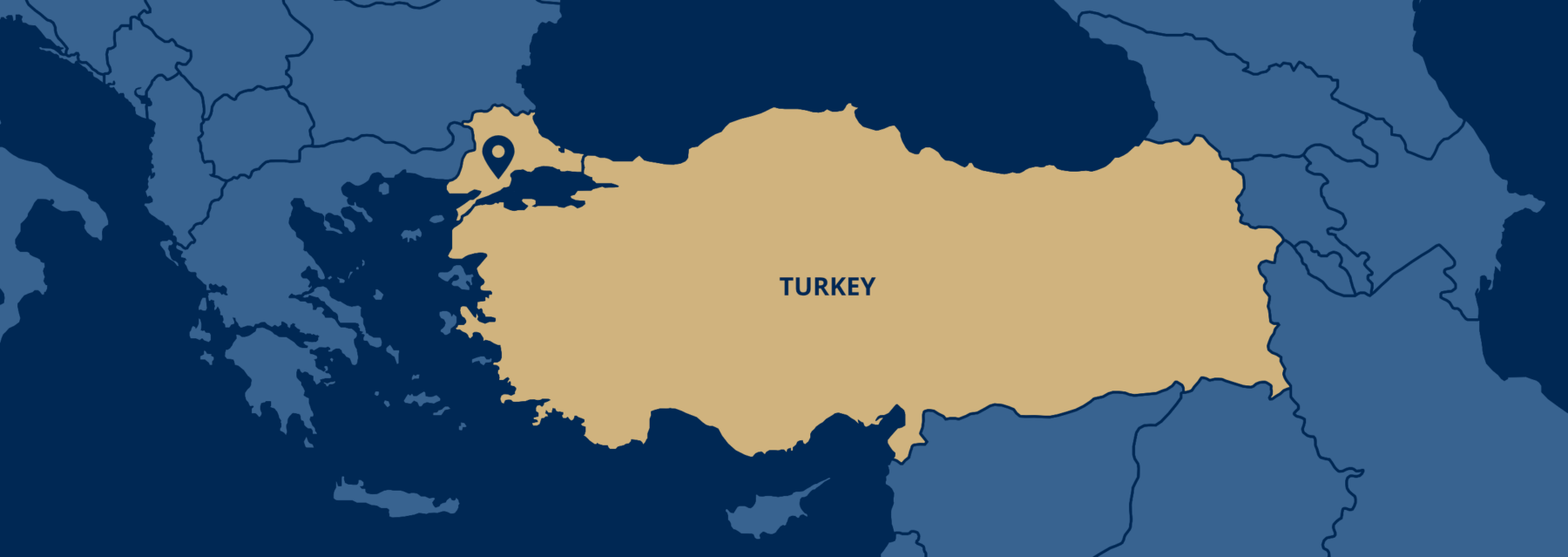
The Republic of Türkiye (formerly Turkey) is located in southeastern Europe and southwestern Asia (that portion of Türkiye west of the Bosporus is geographically part of Europe), bordering the Black Sea to the north, between Bulgaria and Georgia, and bordering the Aegean Sea and the Mediterranean Sea to the south, between Greece and Syria.
Outlined below are some of the key entities involved in Türkiye’s energy and upstream oil and gas sector:
Ministry of Energy and Natural Resources (MENR)
Responsible for the preparation and implementation of energy policies, plans and programmes in co-ordination with its affiliated institutions and other public and private entities
General Directorate of Energy Affairs (EIGM)
The main policy-making body within Türkiye is the MENR. It is tasked with executing national energy policy and it also conducts studies on energy policy, energy markets, efficiency, and environment
General Directorate of Mining and Petroleum Affairs (GDMPA)
Responsible for regulation of exploration and production activities in the mining and oil and gas sectors
Energy Markets Regulatory Authority (EMRA)
The independent regulatory body for the electricity market
Turkish Petroleum Corporation (TPAO)
The national oil company and the main exploration and production entity in Türkiye, including a large presence in the Thrace Basin
Petroleum Pipeline Corporation (BOTAS)
The state-owned vertically integrated gas utility, involved in the construction and operation of oil and gas pipelines, as well as holding a dominant position in the purchase of imported gas and resale to the wholesale market in Türkiye
Fiscal Regime
Turkey’s fiscal regime for oil and gas licences is presently comprised of royalties and income tax. The government royalty rate is 12.5% and the corporate income tax rate is 22%. Additionally, a 15% withholding tax is applied on any dividends distributed to foreign entities. However, the withholding tax may be reduced to 10% depending on the bilateral treaties signed between Turkey and the home country of the petroleum rights holder in Turkey.
Licensing
The licencing process in Turkey for oil and gas concessions occurs in three stages: permit, licence and lease. The New Petroleum Law (Petroleum Law No. 6491) dated June 30, 2013 was adopted by the Turkish Government replacing the longstanding predecessor Petroleum Law No. 6326 adopted in 1954. For a detailed discussion of the licensing regime under the New Petroleum Law, see Valeura’s 2016 Annual Information Form (“2016 AIF”) filed on SEDAR (www.sedar.com).
Energy Infrastructure
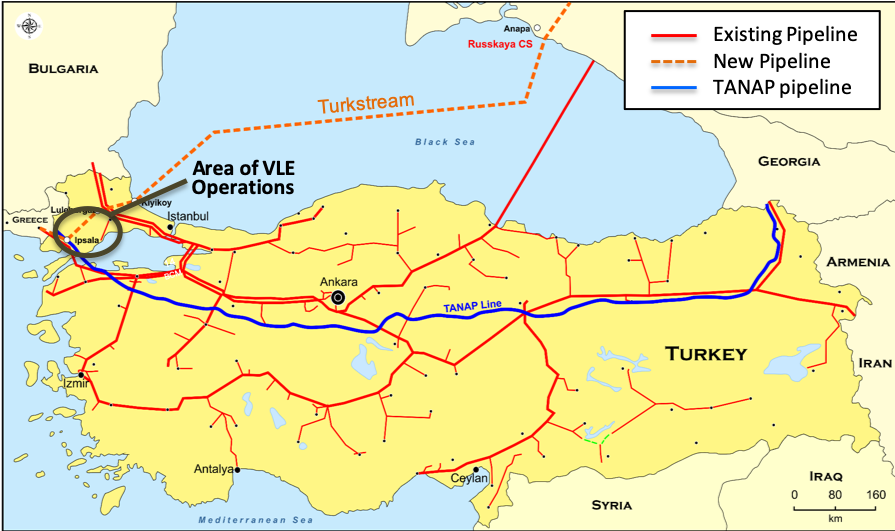
BOTAS, a state company, owns and operates the national crude oil pipeline grid and the national natural gas pipeline grid in Turkey.
With regard to major natural gas pipelines, BOTAS owns and operates the national gas grid which connects essentially all the major population centres and is within easy access to the Company’s existing and planned operations in the Thrace Basin of north-western Turkey.
Pricing
Turkey imports more than 98% of its natural gas and 92% of its crude oil energy needs and as such any new production has a ready market. Consequently, the Company does not foresee any major concern with the marketing of crude oil or natural gas from its operations.
Crude oil pricing in Turkey is determined under the Petroleum Market Law No. 5015 (Gazetted on December 12, 2003). The pricing for the sales of crude oil is established according to the nearest accessible global free market condition. The domestic crude oil price is linked to world market factors with the base market price being the price at the nearest delivery port. Customary transportation and crude oil quality premiums or deductions, as the case may be, are applied to determine the crude oil price at the custody transfer point. Domestic purchasers and refiners are to give priority to domestic crude oil under the above pricing process.
Valeura identified the potential for a deep tight gas play early in its entry into the Thrace Basin.
Based on this thesis, the Company acquired the Banarli Exploration Licence in 2013 (adapted to two licences in 2015) and drilled the Kanzanci-5, Hayrabolu-10, and Yayli-1 wells to depths of 2,900 – 4,000 metres, into over-pressured sands, which provided more evidence supporting the play.
Under the Banarli Farm-In, the Company acquired approximately 500 square kilometres of 3D seismic (Karaca) and drilled the Yamalik-1 exploration well, fully funded by its joint venture partner at the time, as the first well testing the deep, tight gas thesis, into an area with no identified structural closure by design. The well encountered highly over-pressured gas saturated Mezardere and Kesan formations from approximately 2,900 metres down to the total depth of 4,196 metres. The over-pressure at the total depth was greater than 0.8 psi/ft based on testing results. The average net sand in the objective section was approximately 44 per cent.
In the fourth quarter of 2017, Valeura completed four production tests in the Kesan formation in the Yamalik-1 well, where each test was preceded by two slick-water high-pressure stimulations. The testing successfully demonstrated that gas and condensate would flow to surface post- high-pressure stimulation and a 24-hour aggregate production test rate of 2.9 MMcf/d was achieved. The gas flowed with a significant amount of condensate (with a test data range of 20 to 70 barrels per MMcf). The ability to flow high-pressure gas from an area outside of a structural closure supported the interpretation of a deep, tight gas play.
Activities in 2018 focused on the planning and commencement of an appraisal programme for the play, following the Yamalik-1 discovery, to determine whether the over-pressured gas is pervasive across the basin and to demonstrate that the gas could be flowed commercially. The notional programme agreed with partners was to drill appraisal wells, including the second commitment well under the Banarli Farm-in, which would be high-pressure stimulated and tested if successful, and a notional plan to further production test one or two historic wells.
In September 2018, Valeura recompleted Yamalik-1 and tied-in the well to allow for loner-term production testing on a comingled basis. At the end of 24 hours of continuous production, the flow rate was 2.53 MMcf/d through a 20/64” choke with a wellhead pressure of 2,535 psi. After a period of intermittent flow of gas, condensate, and water, a gas lift compressor was installed to assist in the ongoing flow back of stimulation fluids phase of initial production. Pressures and flow rates stabilised after the introduction of gas lift, and the well continued to flow a mixture of gas, condensate and water.
The first appraisal well, Inanli-1, funded by Valeura’s joint venture partner, was spudded in October 2018. The well was approximately 6 km from Yamalik-1 and the key objectives were to determine whether the over-pressured, gas-bearing reservoir discovered in Yamalik-1 is laterally continuous, to test for effective reservoir and over-pressured gas at deeper depths than Yamalik-1, and to test for the presence of enhanced natural fracturing in the reservoir. Drilling operations carried into January 2019 when the well reached total depth at 4,885 metres. Based on drilling and wireline logging data, the well is interpreted to have intersected over-pressured tight gas below 3,270 metres down to the total depth. Four intervals were subsequently stimulated and tested, each demonstrating stable gas production and providing evidence of both fracture and matrix contributions to gas flow.
The second appraisal well, Devepinar-1, funded 31.5 per cent by Valeura, is located 20 kilometres west of Yamalik-1 and Inanli-1 and was spudded in late February 2019. The well was drilled to 4,796 metres, and encountered clear indications of over-pressured gas throughout a 1,066 metre gross column in the Teslimkoy and Kesan Formations. The well met all of its drilling objectives and most significantly, confirmed the presence of over-pressured, gas-bearing reservoir at the western flank of the mapped play fairway. Three intervals were stimulated in the well, and were production tested on a comingled basis, demonstrating dry gas flow to surface, and subsequently tested again in Q1 2020 which demonstrated similar flow characteristics.
In Q2 2020, Valeura integrated all learnings from the drilling and testing of the Inanli-1 and Devepinar-1 wells. The Company has observed that the best reservoir quality in all wells is encountered in the upper few hundred metres of the Kesan Formation. However, the best gas flow results have been achieved deeper in the wells, where the gas is very dry and flows without condensate and minimal water – as seen in the first production test in Inanli-1 at approximately 4,275 metres. The Company intends for the next appraisal wells to target sweet spots which have both of these characteristics; in particular, locations that are closer to the centre of the basin where the high quality reservoir at the top of the Kesan Formation is deeper, and therefore within the dry gas maturity window. Final well locations within this broader area will then focus on regions of more intense natural fracturing, as interpreted on 3D seismic data.
In October 2025 Valeura announced that it had entered into an agreement with a subsidiary of Transatlantic Petroleum LLC to explore for and develop hydrocarbons in the deep rights formations of the Thrace basin. Under the agreement, Transatlantic has an opportunity to earn a 50% undivided working interest in Valeura’s Thrace basin lands through two phases of activity. First, Transatlantic has agreed to re-enter, hydraulically stimulate, and test the Devepinar-1 well. Should that operation result in a commercial discovery, Transatlantic will earn a 50% interest in the western portion of the lands (the West Thrace Production Leases and the West Thrace Exploration Licence). Second thereafter, Transatlantic may opt to drill a deep well, and should that result in a commercial discovery, they will earn a 50% interest in the eastern portion of the lands (the Banarli Exploration Licences). Activity in the field is commencing in Q4 2025.
A video is being shown
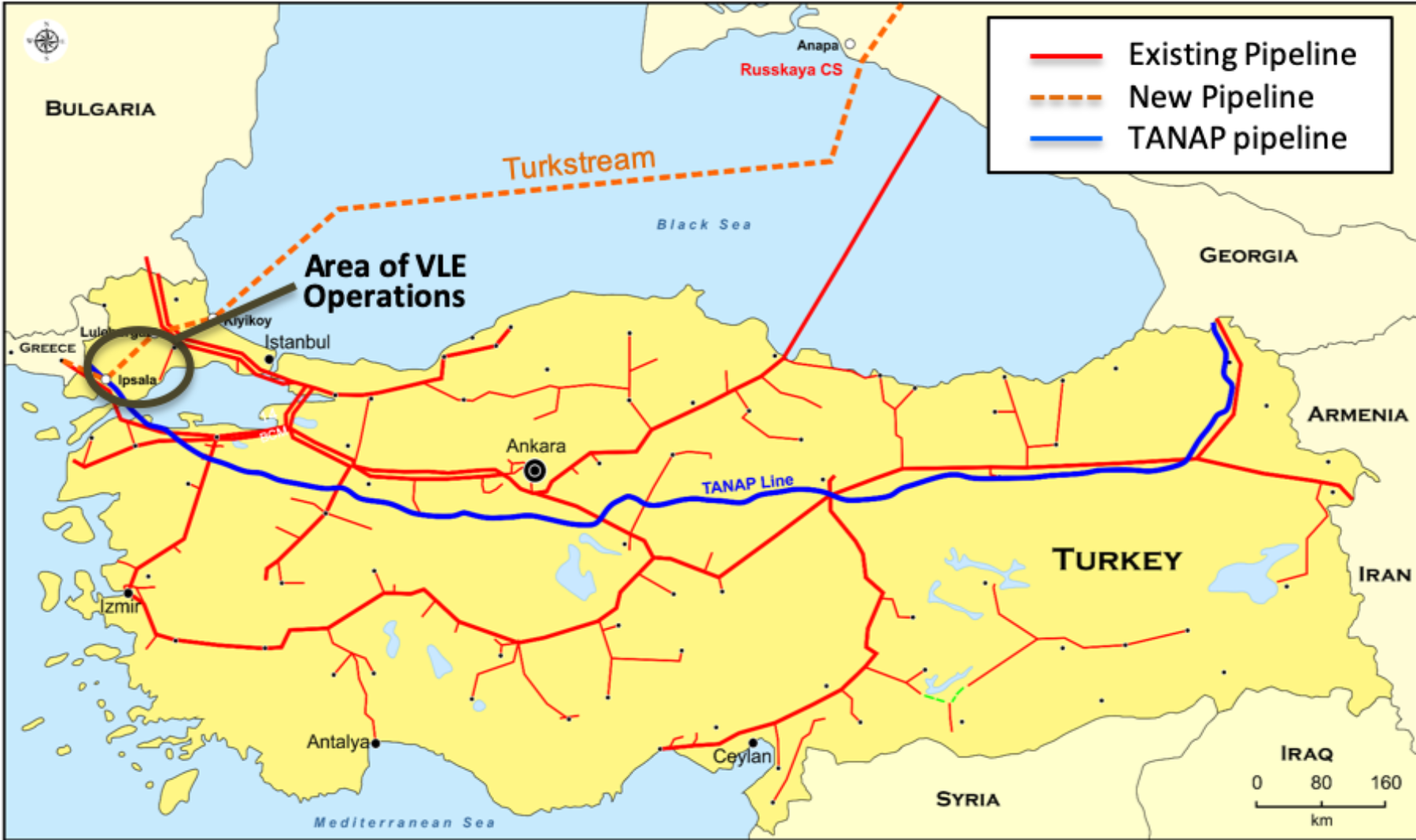
Total natural gas demand in Turkey in 2018 was approximately 4.8 Bcf/d. BOTAS is the major importer and distributor of natural gas in Turkey. Although some import contracts have been released to private operators, BOTAS currently controls approximately 80% of Turkey’s natural gas imports. Given the very small domestic production of approximately 0.07 Bcf/d, there is a robust market for additional domestic natural gas production. Due to the dominance of BOTAS in the natural gas market in Turkey, the BOTAS pricing structure effectively sets the domestic market price. In 2018, Turkey imported approximately 98% of the natural gas it consumed, primarily from neighbouring countries. Accordingly the BOTAS cost tracks world reference pricing and in turn indirectly influences the price available to domestic producers, translated into TL, at some discount. BOTAS regularly posts prices in TL and increases or decreases its Level 2 wholesale tariff from time to time. The BOTAS Reference Price has averaged the equivalent of approximately US$6.70/Mcf over the last two years. BOTAS along with a number of other privately owned natural gas distributors in Turkey are expected to be the main potential purchasers of any new domestic natural gas production. The Company expects the BOTAS Reference Price to continue to be indirectly linked to the weighted average cost of imported gas to Turkey and government policy with respect to the level of consumer subsidies, if any.
The Company expects natural gas pricing under its current and future contracts to continue to be at some negotiated discount to the BOTAS Reference Price. The Company’s natural gas production from the TBNG JV lands are purchased by 49 local customers directly tied in to the Company’s sales gas distribution system at discount which has historically been approximately 2 per cent. to the BOTAS Reference Price. The Company’s natural gas production from the Banarli Licences is currently tied-in to the TBNG JV facilities and is being purchased by the TBNG JV, net of a transportation and marketing fee (of which Valeura receives 81.5% as a partner in the TBNG JV).